
November 21st, 2025 by J B
EMV Chip vs. Contactless: Why It Matters for Your Rates
Filed in: Merchant Accounts |
There’s a common misconception that contactless payments cost more to process than EMV chip transactions. Here’s the truth: from an interchange rate perspective, they’re the same. They do however have differences and understanding them still matters for your business.
The Rate Reality
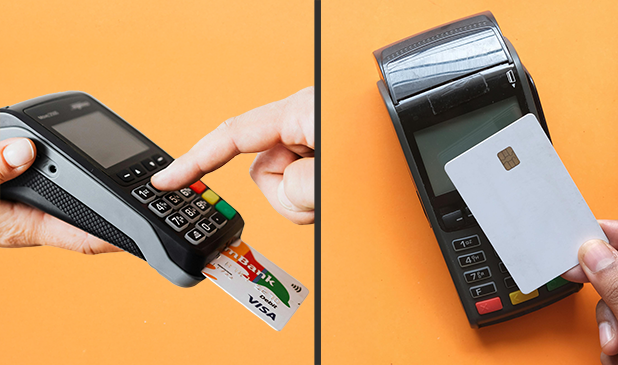
Both EMV chip (dipping the card) and contactless (tapping the card or phone) qualify for the same card-present interchange rates, generally 1.80% or less depending on the card type. The real rate difference isn’t between chip and contactless. It’s between card-present transactions (chip or contactless) and card-not-present transactions (keyed or online), which can cost up to 3.25%.
Where the Differences Actually Matter
Speed: Contactless transactions process in 1-3 seconds compared to 5-15 seconds for chip transactions. For high-volume businesses like quick-service restaurants or convenience stores, this speed difference directly affects throughput and customer satisfaction.
We have all been in that long line where each person being checked out seems to take an eternity. Speeding up payments is a small change that can add up to saving minutes for the customers standing in line.
Customer Preference: Over 80% of global card transactions in 2025 were contactless. While the US saw significantly less contactless payments, customers are increasingly expecting tap-to-pay options. On top of that, employees prefer it as well. Staff who process many payments per day greatly appreciate the speed and ease of contactless sales.
Mobile Wallets: Contactless technology enables Apple Pay, Google Pay, and other mobile wallets. These aren’t separate payment methods but rather ways customers can use that same contactless technology. As mobile wallets continue to things such as gift cards, event tickets, and even State IDs, many consumers are leaving their typical wallet at home.
Security Considerations
Both chip and contactless transactions include liability shift protection, meaning you’re not liable for counterfeit fraud when using either method with proper equipment. Contactless actually uses tokenization, where the card number is replaced with a unique code for each transaction. This makes contactless potentially more secure than chip, though both are significantly safer than magnetic stripe.
Keep in mind that with magstripe and keyed transactions the merchant holds the liability if they accept counterfeit cards or fraudulent transactions. If your business is a card-present business, avoid swiping or keying sales whenever possible.

What This Means for Your Business
If you’re currently only accepting chip transactions, adding contactless capability doesn’t increase your processing costs. The rates are identical. What you gain is faster checkout times and the ability to accept mobile wallet payments that many customers prefer. Most modern equipment has the ability to do both, so many times you don’t even need to buy new equipment. You just might need to have the processor walk you through a software update.
For most in-person retail businesses, there isn’t much else you can do to optimize interchange rates. Card-present transactions already qualify for the best rates available for consumer cards. The key is to make sure your equipment supports both chip and contactless so customers can pay however they prefer.